Most companies don’t realize how much energy they waste on IT until the noise stops.
Not because they bought better tools.
Not because they hired a “cloud expert.”
But because their infrastructure finally makes sense.
A proper IT architecture doesn’t feel like innovation.
It feels like quiet.
No more guessing.
No more firefighting.
No more “we’ll fix it later.”
This is what actually changes when chaos gives way to control.
Before and After Architecture
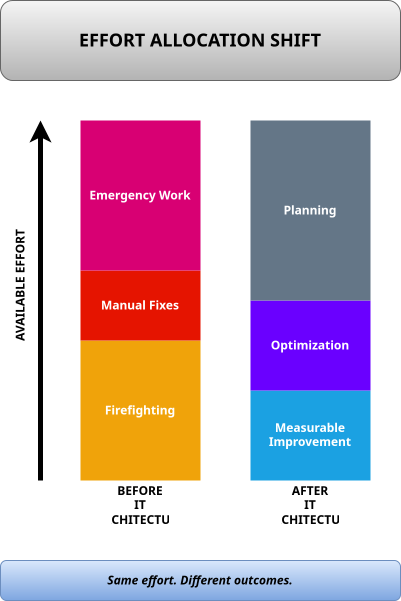
Before Architecture: Invisible Friction Everywhere
In poorly structured environments, problems don’t announce themselves clearly. They leak.
Nothing is technically broken — yet everything feels fragile.
The result isn’t just downtime. It’s cognitive load.
Your team spends its energy compensating for the infrastructure instead of using it.
After Architecture: The System Starts Carrying the Weight
A proper IT architecture shifts responsibility from people to structure.
Instead of relying on:
You rely on:
This is the moment when IT stops being a constant background anxiety and becomes what it was supposed to be all along: boring, reliable, and invisible.
Stress Drops First — Always
The first thing that disappears is not cost.
It’s not complexity.
It’s stress.
Not the dramatic kind — the low-grade, constant pressure.
When architecture is sound, these questions have answers. Written ones.
Not guesses.
What changes:
You stop reacting. You start operating.
Clear Processes Replace Tribal Knowledge
In chaotic environments, processes exist — just not on paper.
They live in:
That works until it doesn’t.
A proper architecture forces clarity:
This clarity doesn’t slow teams down.
It removes negotiation from every action.
Result:
You can finally separate human error from system failure.
Growth Becomes Predictable Instead of Dangerous
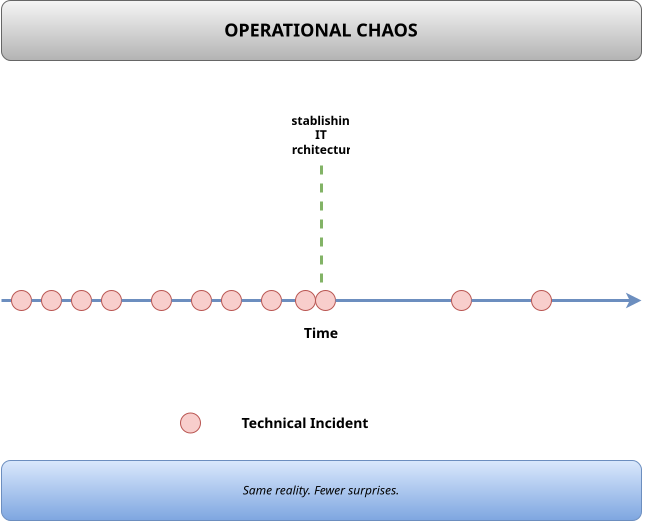
Most companies fear growth — not because of business risk, but because IT breaks first.
Without architecture:
Everything scales… except control.
With architecture in place, growth becomes mechanical:
Growth stops being a gamble.
It becomes a calculation.
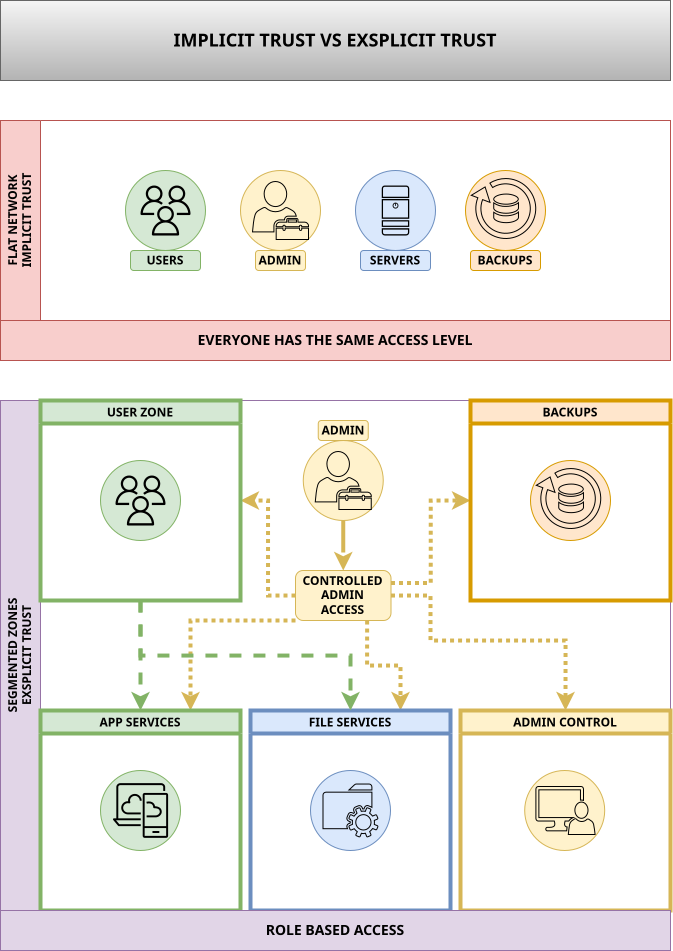
Ownership Becomes Explicit
One of the most underrated outcomes of proper IT architecture is clarity of responsibility.
In chaotic setups:
In structured environments:
This isn’t about blame.
It’s about control with evidence.
Decisions Get Faster — and Better
When systems are predictable, decisions stop being emotional.
You no longer ask:
“Is this risky?”
You ask:
“Which component does this affect?”
That difference matters.
Architecture turns decisions into engineering problems, not political debates.
This is the part nobody budgets for — but everyone feels.
When IT stops breaking:
Trust isn’t built by uptime alone.
It’s built by consistency.
And consistency is architectural.
Control Is Not About Restriction
This matters, so it deserves to be explicit.
Control does not mean:
Proper control:
Freedom without structure is fragility.
Structure enables freedom.
The End Result: Boring IT, Serious Business
When IT architecture is done right:
That’s the real transformation.
Not shiny dashboards.
Not certifications.
Not cloud logos.
Just control instead of chaos.