Firewalls don’t save bad architecture. Period.
Every breach story starts the same way.
“But we had a firewall.”
“But we had antivirus.”
“But we passed the compliance audit.”
And yet—data leaked, systems encrypted, business stopped.
That’s not bad luck.
That’s bad design.
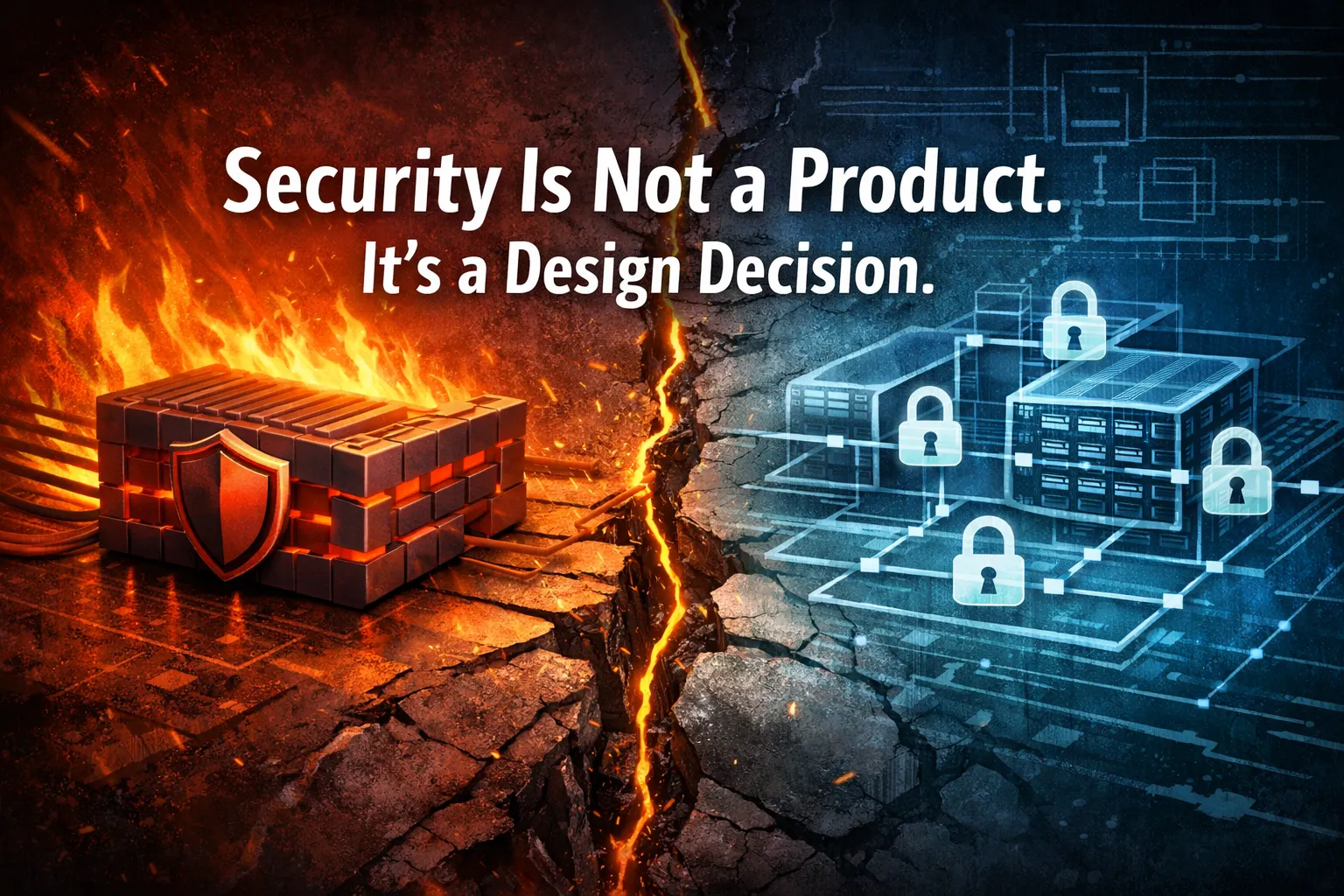
Security doesn’t come from products.
It comes from decisions made before the first server ever boots.
The Dangerous Myth: “We’ll Secure It Later”
Most infrastructures are built backwards:
This is not security.
This is hope with a budget.
If your architecture assumes trust and your tools try to compensate for it, you are already exposed.
Firewalls Don’t Fix Flat Networks
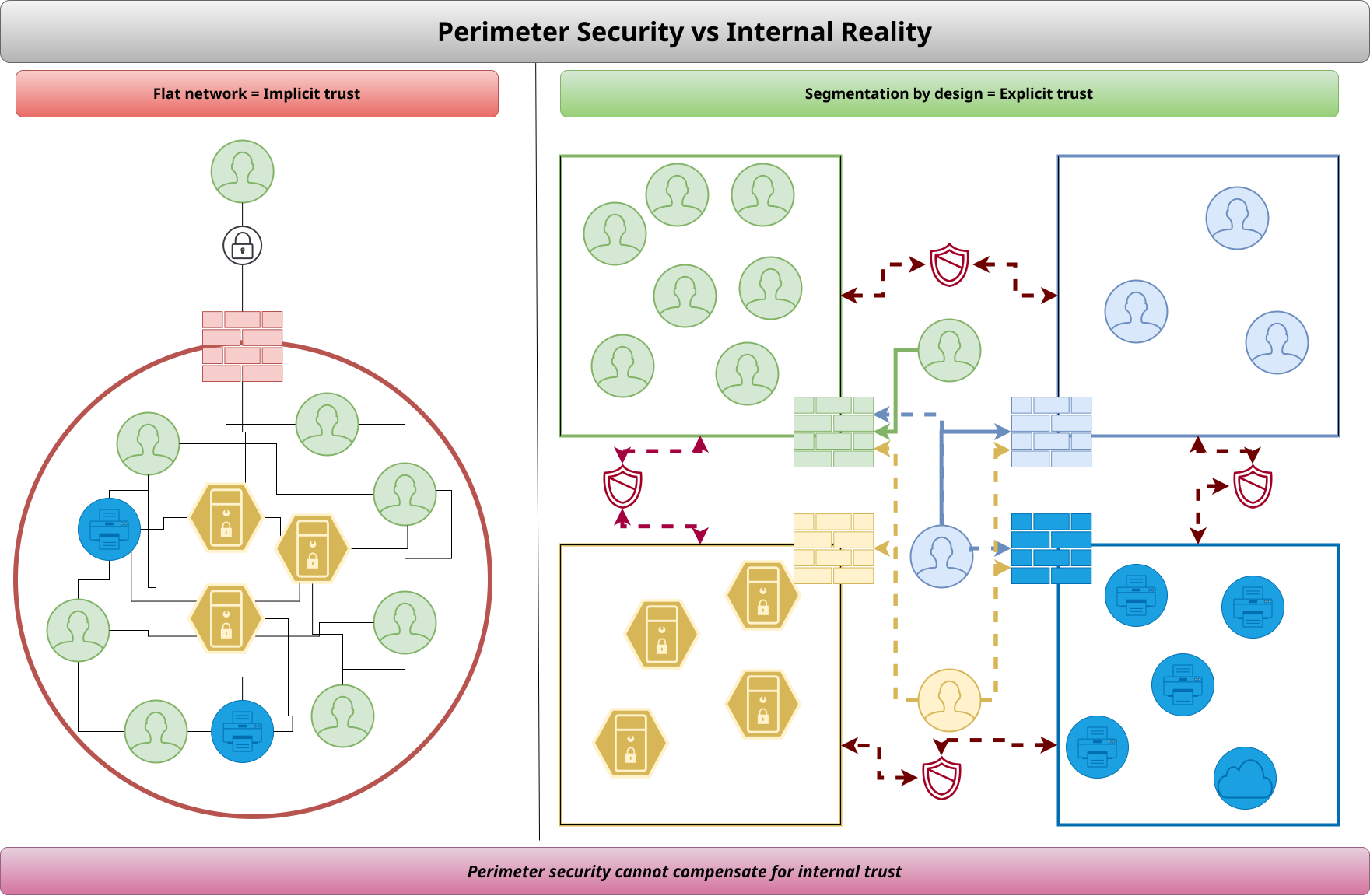
A firewall is a traffic filter, not a design correction tool.
If:
Then the firewall is just guarding the front door while all the internal doors are unlocked.
Security Is Decided at Architecture Time
Security is not:
Security is decided when you answer questions like:
If these questions were never asked, no product will save you later.
The Illusion of “Enterprise-Grade”
“Enterprise-grade security” has become a marketing phrase that means nothing.
Real enterprise environments don’t rely on magic tools.
They rely on:
Big companies don’t survive breaches because they bought better firewalls.
They survive because one compromised component doesn’t equal total collapse.
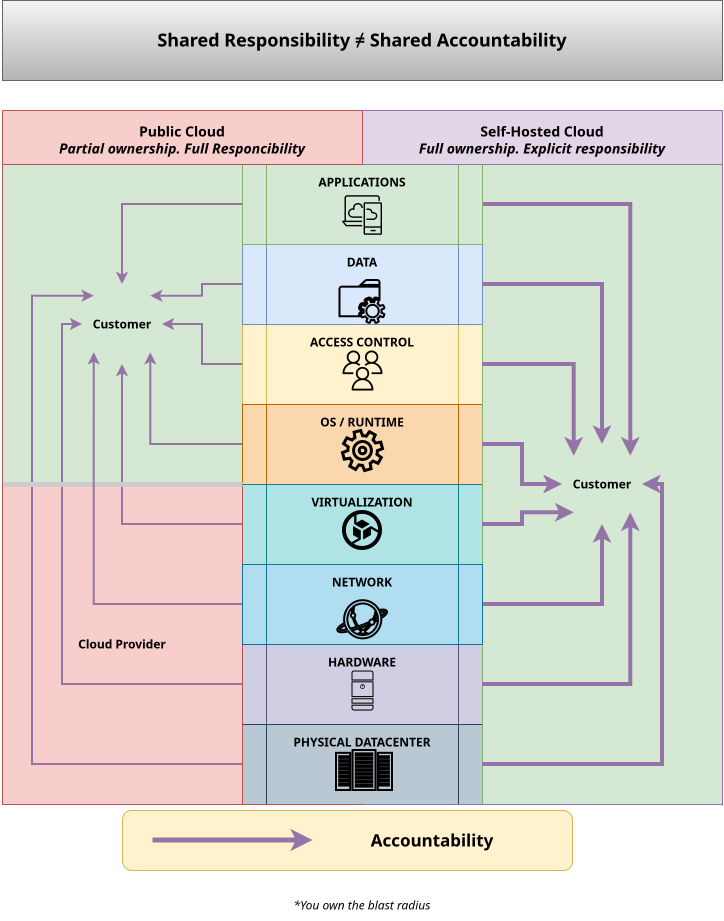
Cloud providers love this phrase.
“Security is a shared responsibility.”
Translation:
If your architecture is flat in the cloud, it is just as flat on-prem.
The environment didn’t fail you.
Your design did.
Breaches Are Rare. Bad Designs Are Not.
Most attacks aren’t sophisticated.
They exploit:
Once inside, the attacker doesn’t “hack”.
They walk.
Security products detect.
Architecture contains.
The Real Question You Should Ask
Not:
“What firewall should we buy?”
But:
“What is the maximum damage a single failure can cause?”
If the answer is:
Then the problem is not your tools.
It’s your design philosophy.
Design First. Tools Second.
Good security architecture assumes:
And it limits the consequences by design.
Firewalls, IDS, antivirus, monitoring—these are reinforcements, not foundations.
You don’t reinforce a building that was never structurally sound.
Final Thought
Security is not something you add.
It’s something you decide.
Decide:
Everything else is just hardware.